General dentists
Review tooth-preserving preparation and adhesive decisions for everyday direct restorations.
Search courses, instructors, specialties and techniques.
Restorative & Esthetic Dentistry
Preserve tooth structure through adhesive and stress-reduced composite techniques.
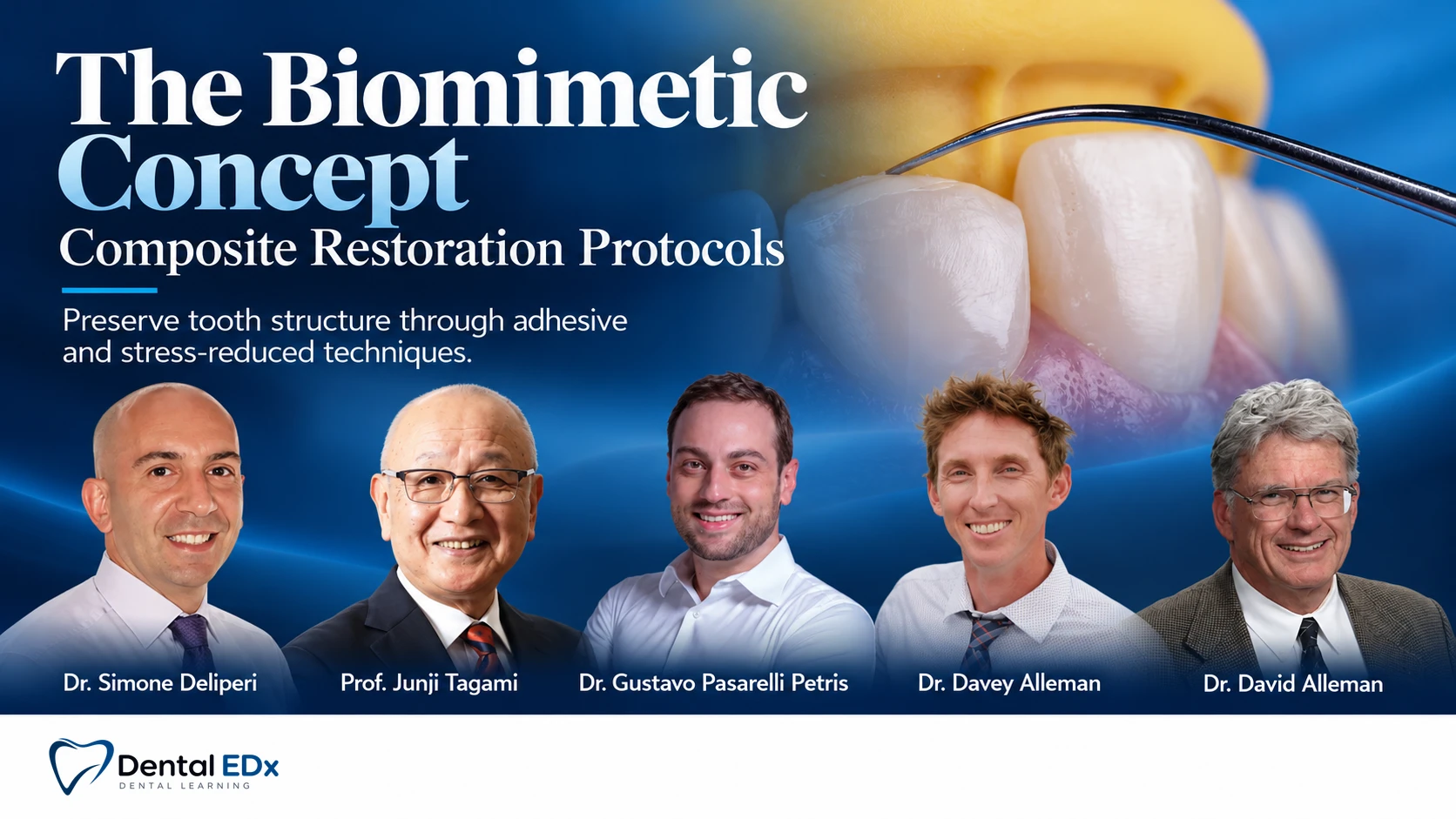
With Dr. David Alleman, Prof. Junji Tagami and faculty
Course information
Explore how adhesion, tooth preservation and polymerization-stress control work together in biomimetic restorative dentistry. The course connects anterior composite techniques with restorative strategies for structurally compromised teeth.
Review adhesive systems, tissue-specific bonding, layering and curing, then examine stress-reduced direct composite protocols and the six principles of biomimetic restorative dentistry. The teaching brings material behavior into the preparation and restoration sequence.
Who this course is for
Designed for dentists seeking a more conservative approach to anterior and posterior composite treatment.
Review tooth-preserving preparation and adhesive decisions for everyday direct restorations.
Connect anterior esthetics, layering and finishing with bonding and material behavior.
Explore stress-reduced composite strategies and the management of remaining tooth structure.
Biomimetic principles
A biomimetic approach considers the remaining tooth and the behavior of the restorative material as one system.
Study how preparation, the adhesive interface, incremental placement and curing influence the restorative sequence. The course explores direct techniques rather than treating every damaged tooth as an indication for extensive preparation.
Let the remaining tooth structure inform the restorative approach.
What you’ll learn
Review enamel and dentin bonding, adhesive systems and the preparation of the bonding surface.
Explore non-invasive and minimally invasive approaches to direct composite restoration.
Study stress-reduced placement and curing protocols for structurally compromised teeth.
Connect case planning, layering, anatomical form and finishing in direct esthetic treatment.
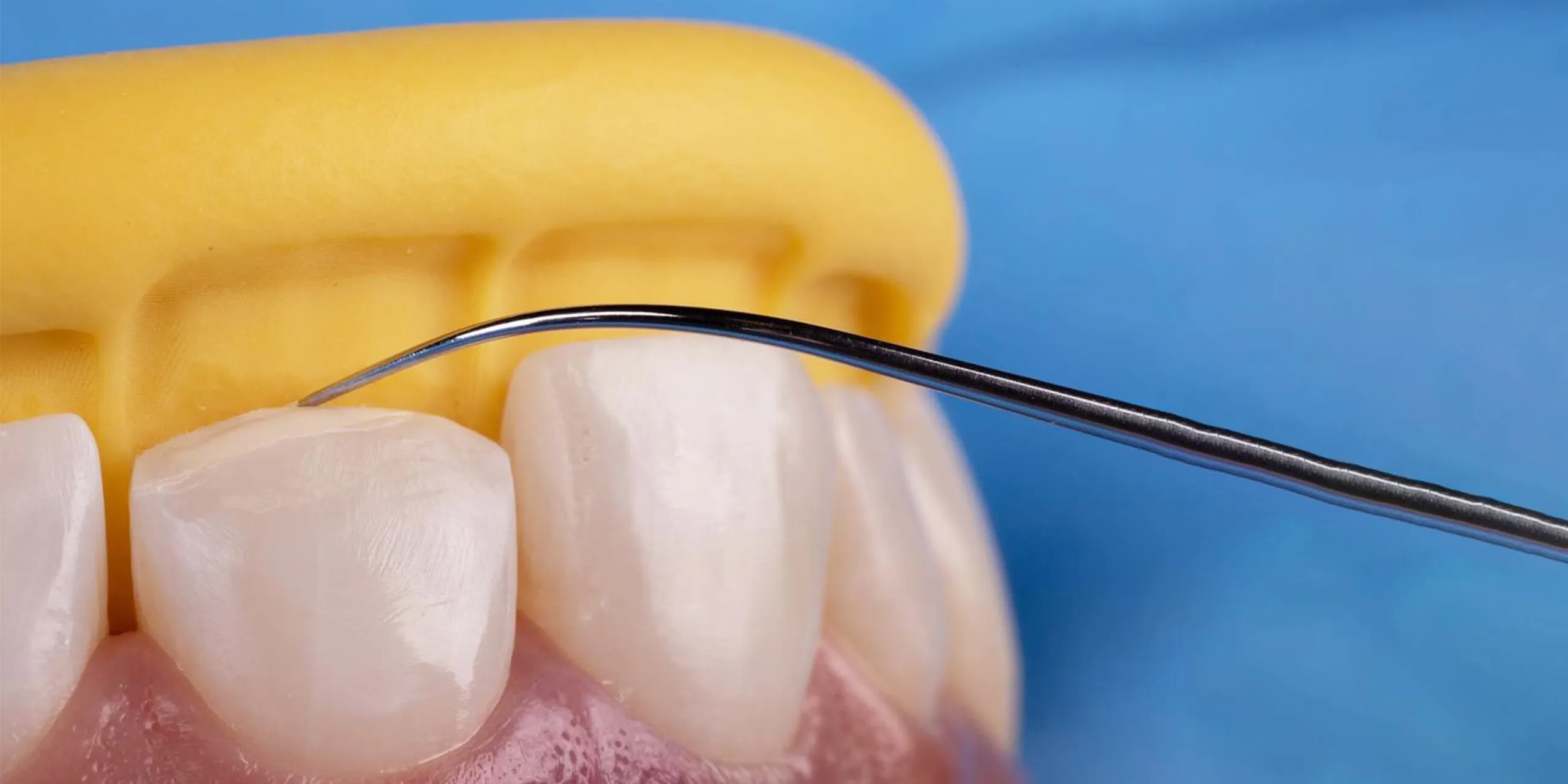 Plan the adhesive interface before building the restoration.
Direct composite technique
Preparation and isolation support the adhesive stage; material placement, layering and curing then shape the restoration. The source clinical illustration shows anterior composite work with a supporting index.
Course curriculum
Review the complete lesson list and available runtimes.
Your faculty
Learn from five educators exploring conservative treatment, adhesion and composite restorative techniques.

Stress-reduced composite restoration
A restorative educator associated with the stress-reduced direct composite approach. The course explores layering, curing and restoration of structurally compromised teeth.

Adhesive and conservative dentistry
His sessions examine tooth- and pulp-friendly adhesive treatment, bonding mechanisms and direct esthetic restoration with adhesive and composite materials.

Composite restorative dentistry
Dr. Gustavo Pasarelli Petris joins the teaching faculty for this course on conservative direct restorations, adhesion and biomimetic treatment.

Biomimetic restorative dentistry
Dr. Davey Alleman contributes to this course’s exploration of tooth preservation, adhesive interfaces and stress management.

Biomimetic restorative principles
The course includes his six principles of biomimetic restorative dentistry, connecting bondability, polymerization stress and conservative restorative protocols.
Your learning experience
Revisit the relevant adhesive, layering or stress-reduction lesson at your own pace.
Review bonding decisions in relation to enamel, dentin and the restorative material.
Follow the relationship between preparation, composite placement, curing and finishing.
Use the eight lessons as a reference for conservative restorative approaches.
Frequently asked
Need help choosing the right course? Contact support@dentaledx.com.
After payment, you receive access to your membership area and purchased course. Use the email address provided during checkout. If you have any access issue, contact support@dentaledx.com.
Yes. Course videos and included learning materials can be downloaded for offline review.
No. Your purchase includes lifetime access, so you can learn at your own pace and revisit the course.
Major cards and PayPal are accepted. Apple Pay, Google Pay, Klarna, Afterpay and other local methods may appear depending on your country.
Yes. A certificate of completion is provided after you complete the course requirements.
DentalEDX uses a digital-first learning model that reduces traditional education and distribution costs, making clinical education more accessible worldwide.
Yes. Courses can be accessed on desktop, laptop, tablet or mobile phone.
A purchase confirmation and receipt are sent to the email used at checkout. Contact support@dentaledx.com if you need additional invoice information.
You can request a refund within 48 hours of purchase or a course replacement within 7 days of purchase. Email support@dentaledx.com with your order details. These are request windows, not processing times. See our Refund Policy in the footer.
Courses include multilingual subtitle support. If you need a language that is not available, contact support@dentaledx.com.
Choose “Forgot password?” on the login page and follow the email instructions. If you still need help, contact support@dentaledx.com.
Ready when you are
Follow the course at your pace with lifetime access.